

Of everything you decide while planning a wedding, the timeline is what shapes how the day feels and the last thing anyone thinks about. The ceremony time gets chosen around the caterer, around the church, or because “six o’clock sounds fine”, and then hair and make-up overrun, the guests spend forty minutes standing in the sun and the portraits land in the harshest light of the day.
That’s a shame, because fixing it costs no money: it costs half an hour of conversation and moving three things around.
This is the guide we’d like every couple to read before locking in times: what time to start getting ready so you’re not rushing, when to tell guests to arrive, what time to hold the ceremony and how long each block of the day really takes. At the end there are two complete timelines you can copy as they are.
The golden rule: build the day backwards
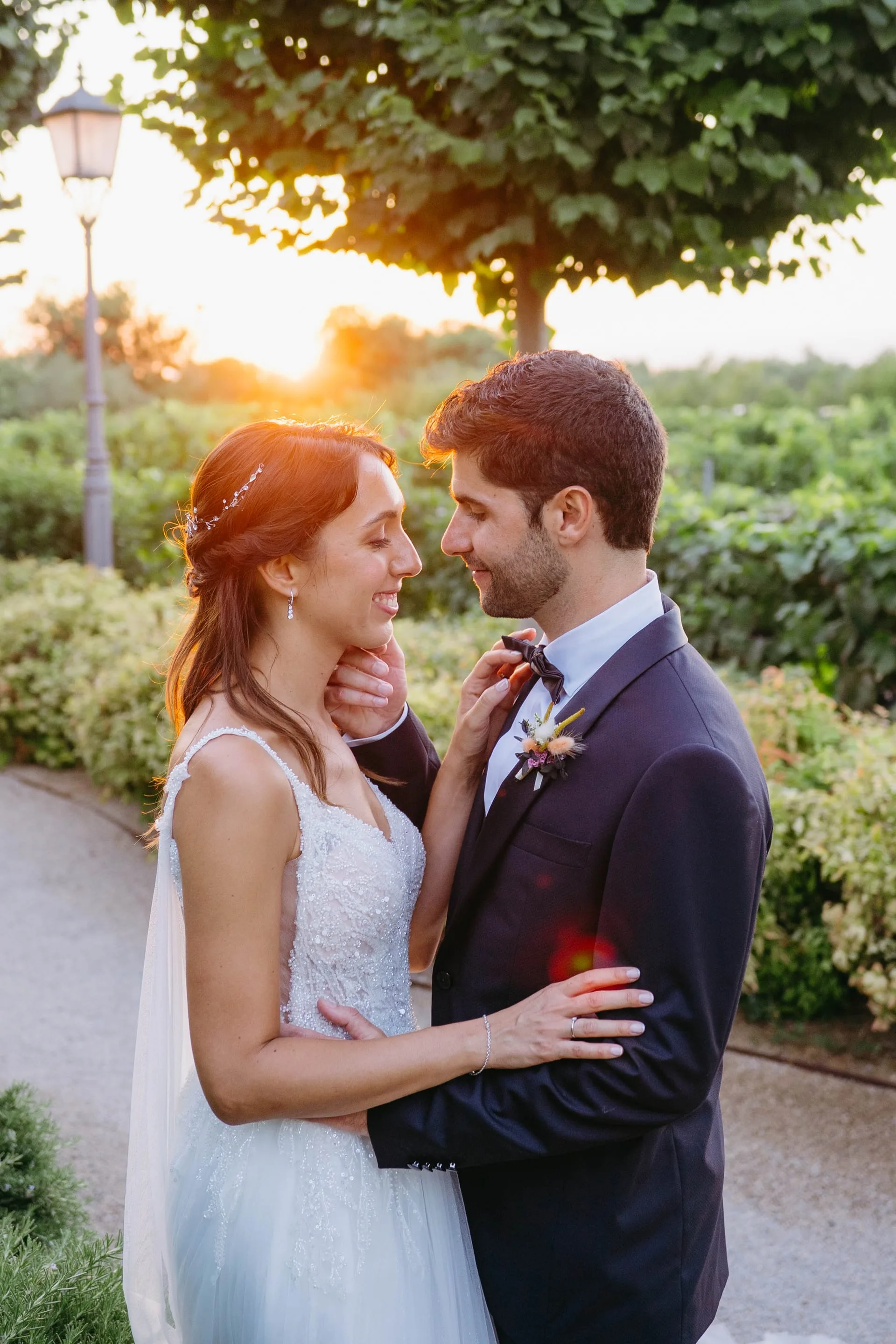
Before you fix anything, there’s one time that isn’t up for negotiation: sunset. The best light of the day arrives in the last hour before it, and that hour is whatever the month says it is. Almost everything else can move; that can’t.
Approximate sunset times in Tarragona, mid-month:
| Month | Sunset | Golden hour | Blue hour |
|---|---|---|---|
| May | 21:05 | from 20:05 | 21:30 |
| June | 21:30 | from 20:30 | 21:55 |
| July | 21:25 | from 20:25 | 21:50 |
| August | 20:55 | from 19:55 | 21:20 |
| September | 20:05 | from 19:05 | 20:30 |
| October | 19:15 | from 18:15 | 19:40 |
| November | 17:35 | from 16:35 | 18:00 |
Look at the jump from October to November: the clock change takes an hour and a half away at once. A mid-November wedding with a 17:00 ceremony runs out of natural light before the cocktail hour ends, and that’s something to know when you book, not the week before. We go into it in the piece on autumn weddings in Tarragona.
With that time in hand, the day gets built in reverse: first you place the portrait block inside golden hour, and everything else falls into place.
Hair and make-up: how to be ready on time
This is where most weddings go off the rails, and the easiest thing to fix.
Ask for the finish time, not the start time. That’s the question for your hair and make-up team: not “what time do we start?”, but “what time will I be ready?”. And that time needs to be 45 minutes before you leave the house, not fifteen.
Real timings to work with:
- Bridal make-up: 45 to 60 minutes.
- Bridal hair: 60 to 75 minutes. Between the two, two to two and a half hours.
- Every other person getting ready with you: 30 to 45 minutes. If it’s you, your mother and three friends, that’s over three hours in the chair.
Hence the advice we repeat most: the bride goes last, never first. If they do you at the start and then style five more people, you leave the house with hair that was finished three hours ago and a household full of nerves. The other way round, you leave freshly done.
Four more things that help:
- Time the trial. The hair and make-up trial isn’t only for choosing the look: it tells you how long it actually takes. Write it down.
- Ask how many people are coming and how many chairs run in parallel. One professional alone is not the same as a team of two.
- If you’re going to the salon rather than having them at home, add the trip there, the trip back and the time to get dressed at home. That’s a good 45 minutes nobody writes down.
- Nails the day before. And something to eat mid-morning: you sign better with something in your stomach.
We arrive once the hair is done and the make-up is halfway there: before that there’s nothing to tell, and after it we’re rushing.
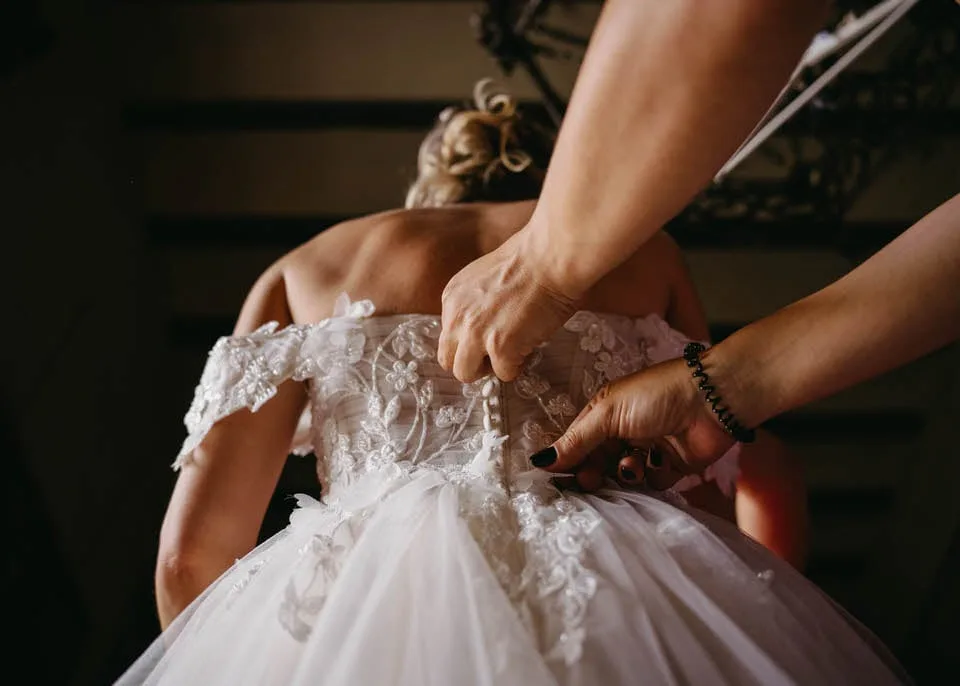
Where to get ready: our advice is to do it all in one place
If your hair and make-up team travels, take them up on it. We’re firmly in favour of getting ready at the same venue where the ceremony happens, usually the hotel or the wedding venue itself. There are several reasons and they all pull the same way:
- Comfort. Nobody gets dressed at home and then spends half an hour in a car in their wedding dress. You walk out of the room and you’re there.
- It cuts the timings. Every transfer is 30 or 45 minutes that vanish from the schedule at a stroke, and they’re exactly the ones you miss at the end of the day.
- Practicality. Everything you need is at hand, and if something is missing, someone runs down for it and is back in two minutes.
- Calm. You can have breakfast without watching the clock, and you don’t arrive at your own ceremony with your pulse racing from the traffic.
- And for the photos, the big one: a hotel gives you neutral spaces and several of them. A room with good light, a corridor, a terrace, the garden. We can move around and pick the best spot instead of making do with the family dining room, with its furniture, its framed photos and a yellow bulb on the ceiling.
If tradition pulls you towards getting ready at your parents’ house, go for it: beautiful weddings happen that way too. Just put it in the timeline with the real transfer time, not the optimistic one.
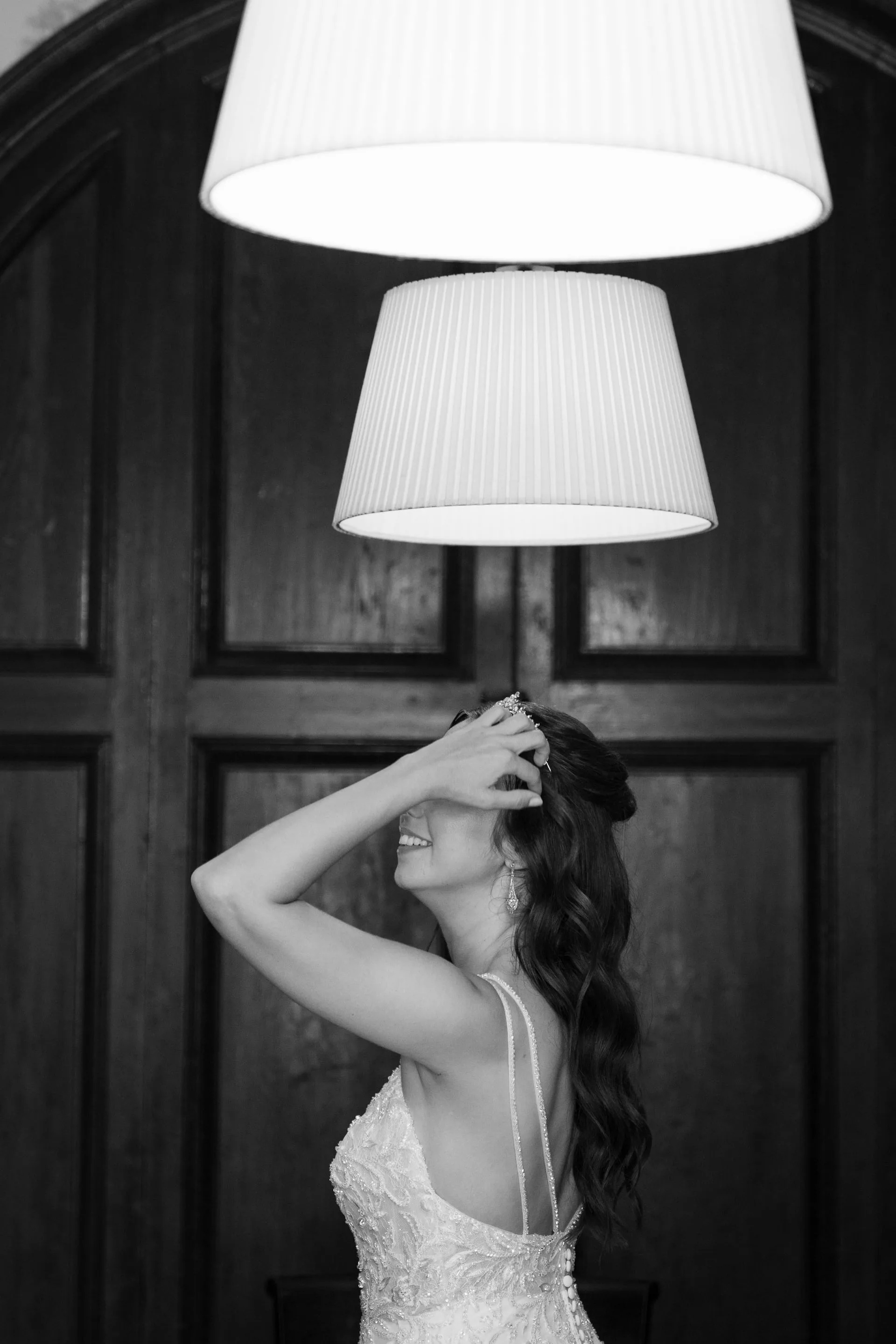
The dress and the details: ten minutes well spent
While they finish getting you ready, we photograph the details. For that to go well and fast, it helps to have everything in one place rather than spread around the room: rings, invitation, shoes, perfume, jewellery, the bouquet if it has arrived and something with a story behind it (your grandmother’s handkerchief, a letter, whatever is yours).
Put it in a bag the night before and tell someone where it is. It’s ten minutes of our time and it saves you the scene of hunting for the rings with the car waiting outside.
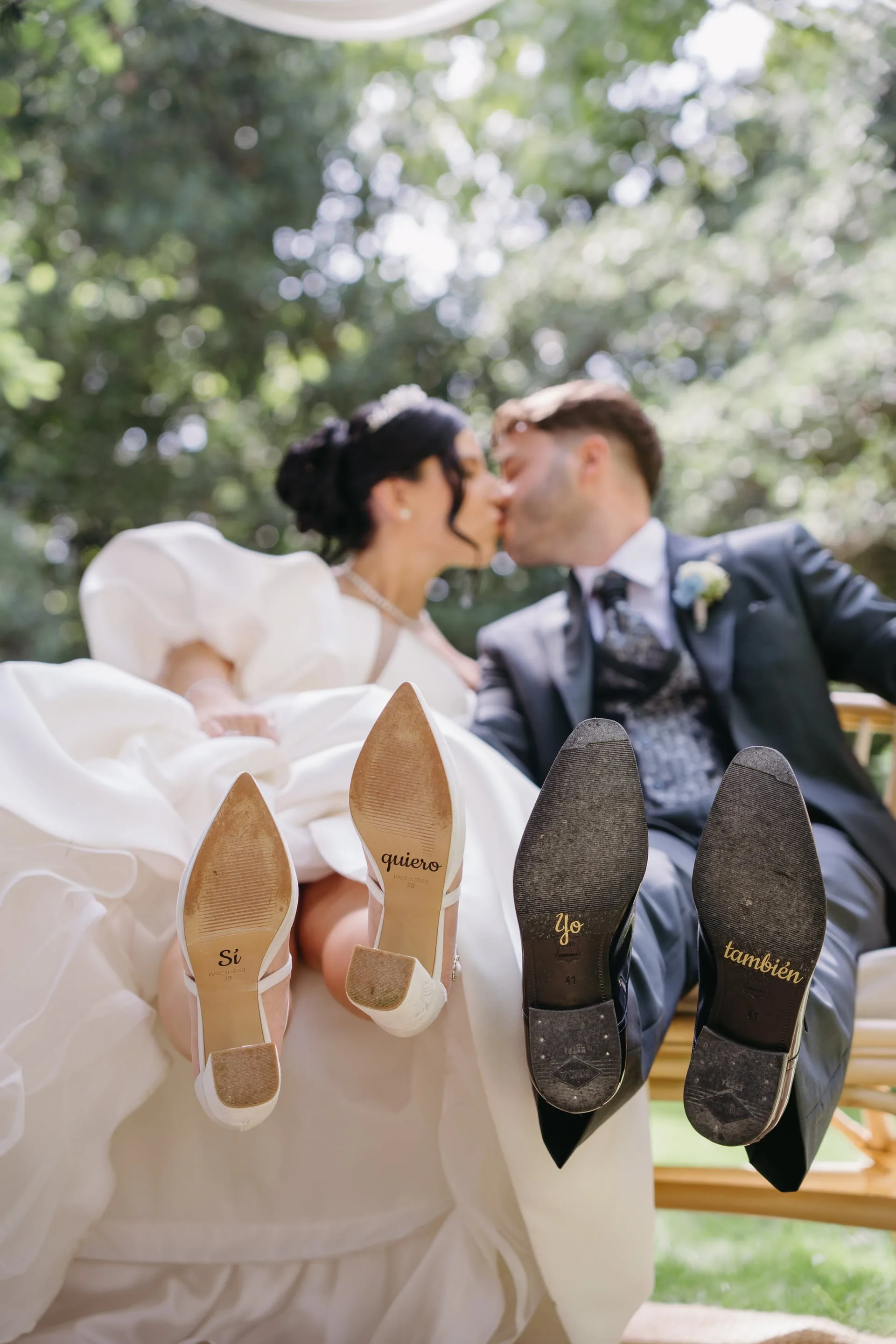
What time to tell guests to arrive
The invitation carries the ceremony time, and guests are asked to arrive 30 minutes earlier. Not “from six o’clock onwards”: a specific time.
With that in mind:
- 30 minutes if the ceremony is at the same venue they arrive at and there’s somewhere to park.
- 45 minutes if parking is far away, if there’s a walk uphill or if the venue is hard to reach.
- If there’s a coach, have it leave 45 minutes before the ceremony and announce the departure time somewhere other than the invitation.
The reality is that more than half of your guests arrive in the last ten minutes, so that margin isn’t padding: it’s what lets the ceremony start on time. And for the ones who are always late, telling them a quarter of an hour earlier works perfectly well.
One note on the bride being late: tradition allows ten to fifteen minutes, and that’s a fine place to stop. Every extra minute doesn’t come from nowhere, it comes out of the cocktail hour or out of your portraits.
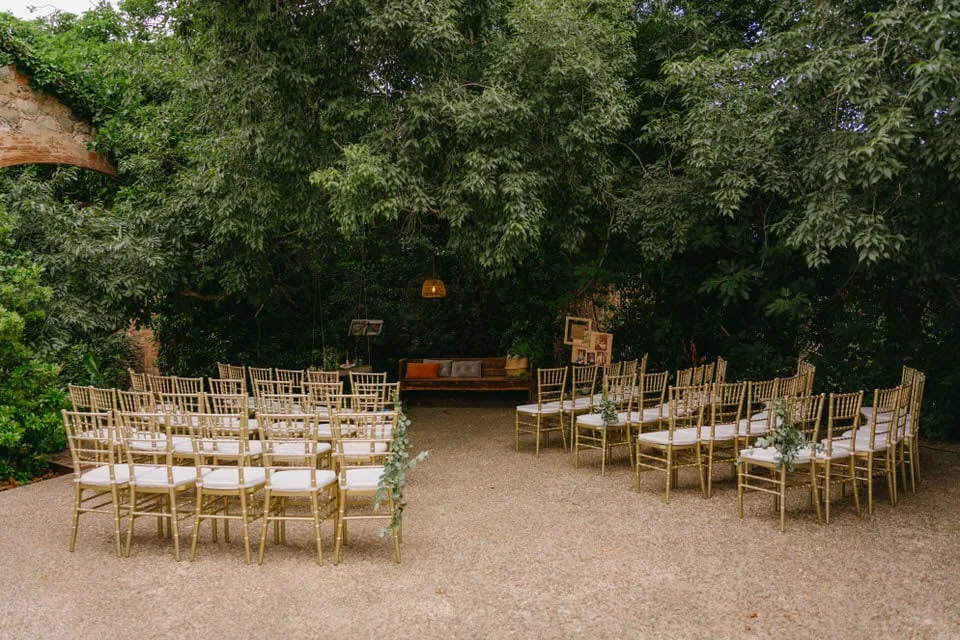
What time to hold the ceremony
It depends on who controls the hour.
If the ceremony is civil and at your venue, you choose the time, so choose it with the light: start between two and two and a half hours before sunset. With a 40-minute ceremony, congratulations and the start of the cocktail hour, the portraits land right inside golden hour. In June that’s 19:00; in October, 17:00; in November, 15:30.
If it’s religious, the parish sets the time and there’s no negotiating. Then you plan in reverse: accept that hour and adjust everything else. If the mass is at 12:00, the cocktail hour stretches, dinner moves later and the portraits happen at the end of the afternoon rather than on the church steps. It works perfectly well, but it has to be decided in advance and shared with the caterer.
Two more things:
- A religious ceremony runs 45 to 60 minutes, and a full mass goes to 75. A civil one, 30 to 45.
- In July and August, an outdoor ceremony before 18:00 is hard on everyone: on you, on the older guests and on the photos. If you can choose, don’t.
How long each block actually takes
These are not the ideal times, they’re the real ones, hiccups included:
- Bride getting ready: 90 to 120 minutes of our coverage (on top of the hair and make-up hours).
- Groom getting ready: 45 minutes. If you’re in different places, add the travel.
- First look (optional): 20 minutes. Seeing each other before the ceremony, alone. If you do it, a lot of pressure comes off the block that follows.
- Ceremony: 30 to 45 minutes civil, 45 to 60 religious.
- Congratulations line: 30 to 45 minutes. The most underestimated block of the day. With 120 guests it’s a long 45 minutes, and you can’t cut it short without leaving someone without their hug.
- Group photos: 3 minutes per group. Ten groups is 30 minutes. Write the list beforehand and have someone you trust round people up.
- Couple portraits: 20 to 30 minutes. Two short blocks beat one long one.
- Cocktail hour: 60 to 90 minutes. This is where the groups and the portraits fit without anyone missing you.
- Dinner: 2 hours. With speeches and surprises, two and a half.
- First dance and open bar: from here on there is no timeline, there’s a party.
The four margins that always get eaten
Nearly every wedding that runs late does so in the same places:
- Hair and make-up overrun. Whatever time you’ve been given, count on 30 minutes more.
- The congratulations line stretches. Nobody wants to cut it, and rightly so. Put the real time in the schedule.
- Moving between venues. Church to masia is 20 minutes of driving plus another 15 of people parking and walking in. Half an hour, always.
- The cocktail hour drifts. If the caterer starts serving late, everything after it moves. Confirm the real start time with them, not the theoretical one.
A timeline with no buffers breaks at the first hitch, and what gets cut at the end of the day is, as it happens, your portraits.
Two complete timelines
June wedding, ceremony at 19:00
| Time | What happens |
|---|---|
| 13:30 | Hair and make-up begins (everyone else first) |
| 16:00 | The bride, last to be done |
| 16:30 | We arrive: details, dress and getting ready |
| 17:30 | Groom gets ready |
| 18:00 | Bride dressed and ready |
| 18:15 | Venue details, before the guests arrive |
| 18:30 | Time on the invitation for guests |
| 19:00 | Ceremony |
| 19:40 | Congratulations |
| 20:20 | Cocktail hour and group photos |
| 20:30 | Couple portraits (golden hour) |
| 21:00 | Walking into dinner |
| 21:55 | Blue hour: five minutes out for two photos |
| 23:00 | First dance and party |
October wedding, ceremony at 17:00
| Time | What happens |
|---|---|
| 11:00 | Hair and make-up begins |
| 13:30 | The bride, last to be done |
| 14:00 | We arrive: details, dress and getting ready |
| 15:00 | Groom gets ready |
| 16:00 | Bride dressed and ready |
| 16:15 | Venue details |
| 16:30 | Time on the invitation for guests |
| 17:00 | Ceremony |
| 17:40 | Congratulations |
| 18:10 | Cocktail hour and group photos |
| 18:20 | Couple portraits (golden hour) |
| 19:00 | Walking into dinner |
| 19:40 | Blue hour, with the venue lights already on |
| 21:30 | First dance and party |
Two hours move on the clock and the logic doesn’t change: the portrait block still lands where it should, and hair and make-up moves with it.
Three details almost nobody plans for
Dinner details are photographed empty. The laid tables, the seating plan, the decor: all of that is shot before anyone walks in. It’s fifteen minutes that need a slot, usually during the cocktail hour.

The drone needs light and calm. If you want aerial shots, the best moment is the cocktail hour or the group portrait with all the guests, not the ceremony and not the night.
Video has its own needs. Speeches, the entrance to dinner or the first dance record better when we know when they’re coming. When photo and video are the same team, that coordinates itself; when they’re two suppliers who have never met, it shows.
What we do with your timeline
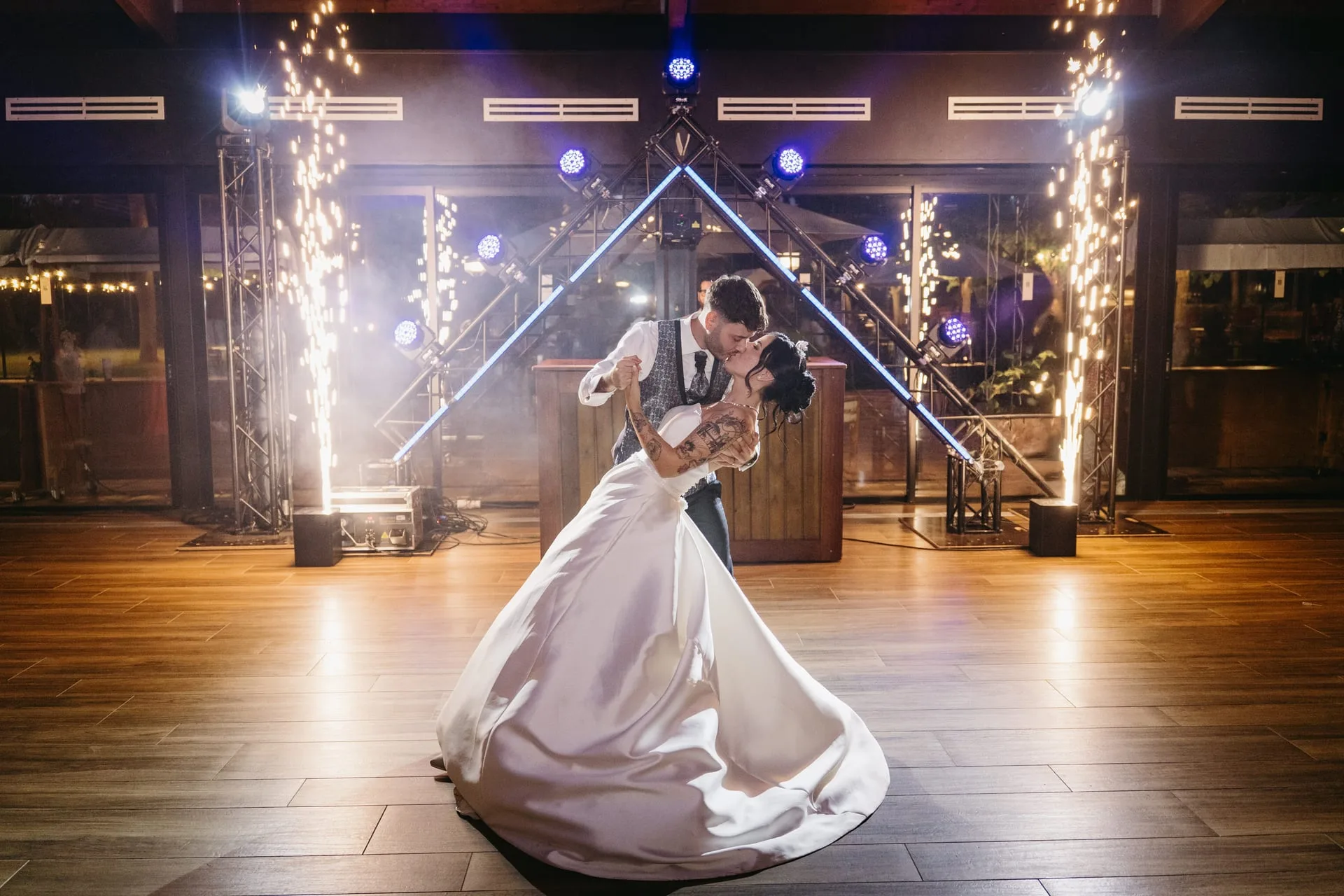
A few weeks before the wedding we ask for whatever schedule you have and we go through it together. We check the sunset time for that exact day, where the portraits land, whether the margins hold, what time hair and make-up will really finish and what happens if it rains. Almost always two or three fifteen-minute adjustments come out of it: nothing changes for you, everything changes for the day.
It’s part of our job as wedding photographers in Tarragona and it costs nothing beyond a conversation.
If you’re putting yours together and want us to look it over, get in touch. And if you’re still deciding which photos you don’t want to miss, this list is a good place to start.
Frequently asked questions about the wedding timeline
What time should I start hair and make-up? Ask your team for the time you’ll be ready rather than the start time, and make it 45 minutes before you leave the house. Count two to two and a half hours for the bride and 30 to 45 minutes for everyone else getting ready with you. And go last, never first.
What time should guests be asked to arrive? Half an hour before the ceremony, with a specific time on the invitation. If parking is far away or there’s a walk, make it 45 minutes. More than half of your guests arrive in the last ten minutes, so that margin is what lets you start on time.
What time should the ceremony start? If it’s civil, count backwards from sunset: starting 2 to 2.5 hours before puts the portraits inside golden hour. In June that’s 19:00 and in October 17:00. If it’s religious, the parish sets the hour and everything else adjusts around it.
Where is it better to get ready, at home or at the venue? Whenever you can, at the same place where the ceremony happens. You save transfers, you arrive calmer and, for the photos, a hotel gives neutral spaces and several lighting options, while at home you work with whatever is there. If your hair and make-up team travels, take them up on it.
How much time should you set aside for couple photos? Between 20 and 30 minutes, better split into two stretches than one. Past that, the tiredness shows on your faces and the photos start repeating themselves.
How many group photos fit without it dragging? Count 3 minutes per group. Eight or ten groups is fine; past fifteen, the whole cocktail hour goes and the guests drift away.
Do you need to do a first look? No, it’s optional. It helps if you want to shed some nerves before the ceremony, or when the timeline is tight on light, because it moves part of the portraits earlier. If you’d rather see each other for the first time at the ceremony, we plan around that.