Let’s start with what nobody in this industry says out loud: we use artificial intelligence almost every day. For our website, for our social posts, to organise ourselves, to look for ideas and references, and for the odd clean-up edit like removing an ugly sign in the corner of a frame. So this isn’t a war between photographers and machines.
It’s something more useful: where AI can save you hours while you plan the wedding, where it can land you in trouble if you trust it, and what exactly it cannot do.
Where it genuinely helps
Planning a wedding is months of small, repetitive tasks. That’s where AI is excellent, because it doesn’t get tired and it doesn’t complain.
| Task | What you can ask for |
|---|---|
| Budget | Split a total across categories and flag what people forget |
| Guests | Sort the list, work out tables, propose a seating plan |
| Copy | Invitations, wedding website, signage, thank-you notes |
| Speeches | Structure and a draft from four memories you give it |
| Timeline | Order the day around the hours you have already fixed |
| Suppliers | Questions to ask before signing, by trade |
| Logistics | Packing lists, rain plan, instructions for guests |
| Languages | Translate the wedding website or the menu for guests from abroad |
What they have in common: they are tasks of sorting and drafting, not of deciding. The decisions stay with you.
Six prompts you can copy
One-line prompts don’t work. The more context you give, the less generic the answer. These are written to copy and fill in whatever sits between brackets.
For the budget:
We are a couple getting married in [month and year] in [town], with [number] guests and a total budget of [amount] euros. Split the budget across categories with a rough percentage for each, point out the three categories where people usually come up short, and tell me which costs are almost always forgotten. Answer in a table.
For the seating plan:
Here is our guest list with each person’s relationship to us. We have [number] tables of [number] people. Propose a seating plan bearing in mind that [family X and family Y] should not sit together, that [name] uses a wheelchair and needs to be near the exit, and that we want our friends mixed rather than split into groups.
For speeches:
Help me write a two-minute wedding speech as the [relationship to the couple]. These are three real memories I want to include: [memory 1], [memory 2], [memory 3]. I want a [warm and funny / emotional and restrained] tone, no clichés, no famous quotes and no use of the word “journey”. Give me the draft, then tell me which parts I should change so it sounds like me.
For choosing suppliers:
I am meeting a [photographer / caterer / florist] for my wedding. Give me fifteen questions I should ask before signing, ordered by importance, including the awkward ones about contracts, cancellations and what happens if they fall ill. Add which answer should make me suspicious in each case.
For the timeline:
Our ceremony is at [time] on [date] in [town]. We have a [length] cocktail hour and dinner for [number] people. Build the day backwards from sunset, with realistic buffers, and mark where delays usually pile up.
For guests travelling in:
Write a welcome text for our wedding website aimed at guests coming from [country]. Include how to get here from [airport], three accommodation options by price range, what to wear for a wedding in [month] on the Mediterranean coast, and which timings will surprise them about a Spanish wedding. In English and in Spanish.
That last timeline prompt works better if you first read how we build the schedule of a wedding day: AI orders things well, but someone has to tell it how long each block really takes.
Where it gets things wrong, and it can cost you money
Here’s the part nobody tells you. AI doesn’t know what it hasn’t seen, and with a specific wedding in a specific town there is a lot it hasn’t seen.
It invents prices. Ask what a wedding photographer costs in Tarragona and you’ll get a confident figure. That figure comes from internet averages, other countries and other years. Don’t use it to negotiate: ask for real quotes.
It invents suppliers. It can recommend a venue with a name, a description and a phone number that doesn’t exist, or that closed three years ago. Check any name it gives you before you write to them.
It gets regulations wrong. Music curfews by town, council fees for a civil ceremony, drone permits, civil registry requirements. All of that changes by town and by year, and it is exactly where AI sounds most certain. We cover the drone side in this article, and the short version is that there are four legal requirements that are not a matter of opinion.
It doesn’t know who is free. Not venue availability, not supplier availability, and not whether that weekend the town’s festival will leave you without hotel rooms.
It doesn’t know the place. It can tell you a venue has “beautiful views at sunset” without ever having been there. We know what time the sun hits the courtyard of every venue we’ve worked in, because we were standing there with a camera.
The rule we give our couples: use AI to prepare the conversation, not to replace it. Let it draft the questions, and let the answers come from whoever will actually be there on the day.
What it cannot do, however much it improves
This isn’t a matter of the technology not being there yet. It’s something else.
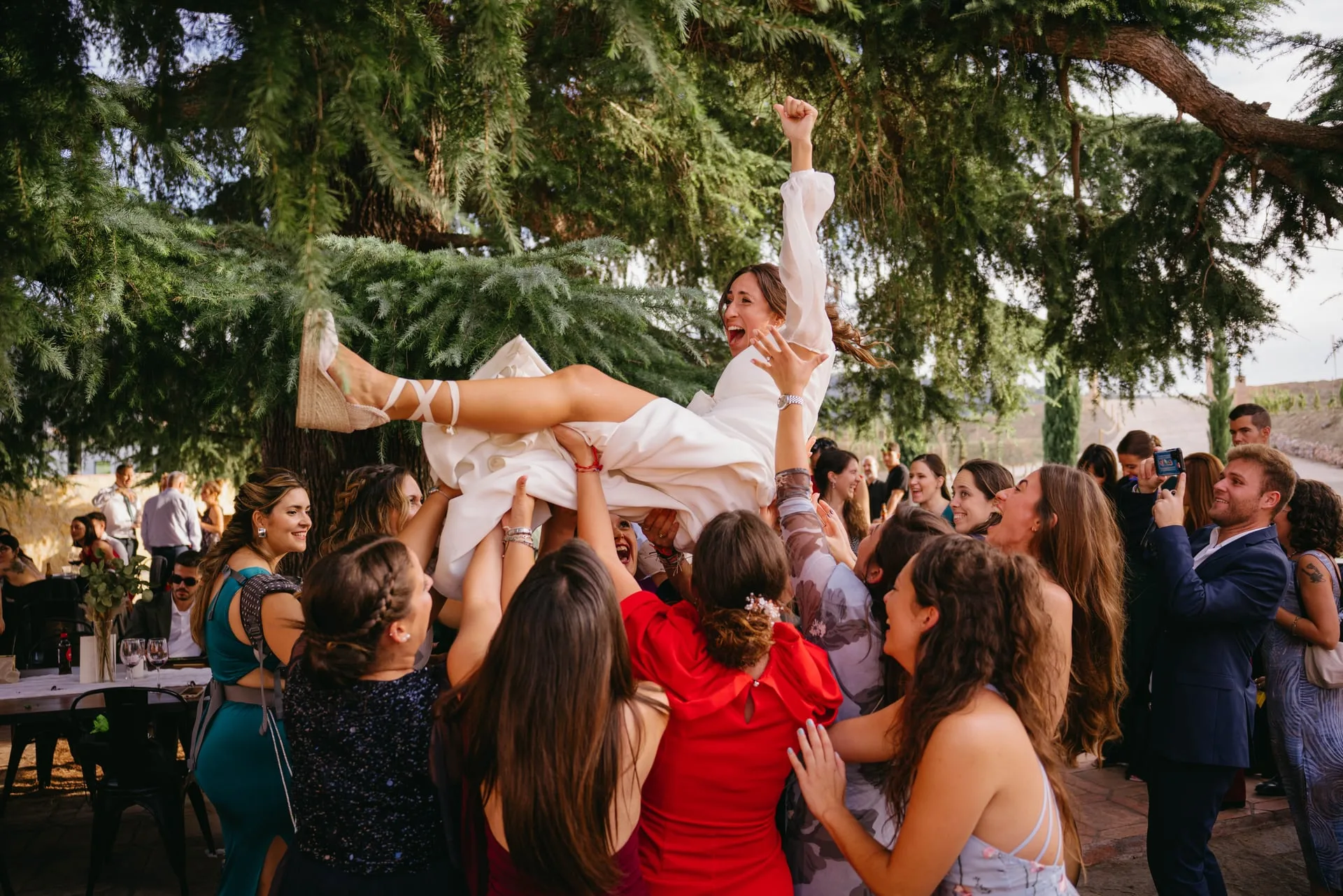
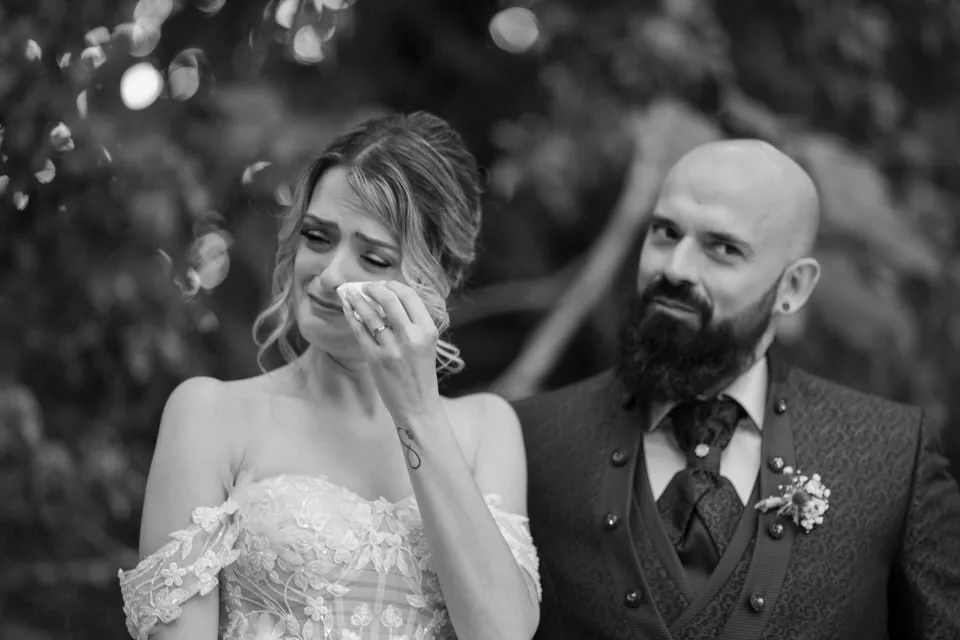
An AI can generate an image of a couple kissing in beautiful light. What it cannot do is be there: see that the bride’s mother has been holding back tears from the third row and turn in time, or know that the friend who won’t stop clowning around is the one who spent fifteen years picking up the pieces when things went badly, and wait for the moment his voice breaks.
A photo isn’t worth something because it’s pretty. It’s worth something because it happened. A generated image can be flawless and still be worth nothing, because in twenty years nobody is moved by something that never took place.
How we use it
Since we’re asking for transparency, we’ll go first. At Lifetime Weddings we use AI for our website and our social posts, to organise ourselves internally, to look for ideas and references before a wedding, and for the odd clean-up edit such as removing something distracting in a corner of the frame.
And here is the line, which is what actually matters: we don’t generate moments that didn’t happen. We don’t change faces, we don’t add or remove guests, we don’t invent light that wasn’t there. What you get is what happened that day, edited with our judgement.
If you’re choosing a team and want to know how each of them handles this, it’s a good question for the first meeting. In fact, add it to the list: it belongs with the mistakes that cost you dearly when hiring a photographer.
If you’d like us to look over what you’ve already put together, or simply to talk about your wedding with someone who has been through a lot of them, get in touch.
Frequently asked questions about AI and weddings
Can AI plan my whole wedding? It can handle the admin: budget, lists, copy, schedules and reminders. What it can’t do is negotiate with a supplier, know whether a venue is free on your date, or decide for you. Think of it as an assistant that organises, not a planner that decides.
Is what it says about supplier prices reliable? No. It gives confident figures drawn from internet averages, other countries and other years. Useful for a very rough idea, never for negotiating or budgeting. Ask real suppliers for real quotes.
Can I use AI-generated photos at my wedding? For inspiration, yes, and it works well for showing your team the style you like. As a record of the day it makes no sense: a generated image is pretty, but it didn’t happen, and that is precisely where a wedding photo gets its value.
Do photographers use AI to retouch? Many do, for clean-up work like removing a distracting object, reducing noise or speeding up editing. The important question isn’t whether they use it, but where their line is: ask whether they generate or alter people and moments. We don’t.
Is AI going to replace wedding photographers? Not for what matters. It can generate beautiful images of weddings that never existed, but it can’t be at your ceremony, anticipate a reaction or document what actually happened. What it does replace is generic photography, which is one more reason to choose someone who works documentary-style.
What should I ask AI before meeting a supplier? Ask for a list of questions by trade, including the awkward ones about contracts, cancellation and cover in case of illness, and ask which answers should make you suspicious. Then ask those questions yourself, in person.